

JAPANESE ECONOMIC AND BUSINESS WEEKLY NEWSLETTER: 25 July - 21 August,2026
The EU Japan Centre is releasing a weekly press review covering Japan's economic and business matters.
Outline
▶ China rare-earth exports to Japan, US plunge after restrictions
08 Aug, 2026
 Photo Source: Reuters
China’s exports of restricted rare earths fell sharply in the first half of 2026, dropping 51% to Japan and 28% to the U.S. The decline highlights Beijing’s use of critical minerals as economic and diplomatic leverage. Supplies of key materials such as dysprosium, terbium and yttrium to Japan have become particularly constrained, raising concerns for the automotive and high-tech industries. The issue remains a major point of tension in both Japan-China and U.S.-China relations.
Nikkei Asia:https://asia.nikkei.com/business/materials/china-rare-earth-exports-to-japan-us-plunge-after-restrictions
▶ Japan taps public-private funds for shipbuilding, eyeing next-generation vessels
10 Aug, 2026
 Photo Source: Nippon Yusen via JIJI
Japan is launching a major public-private effort to revive its struggling shipbuilding industry, aiming to double production by 2035 with about ¥1 trillion in investment. The plan focuses on modernizing shipyards, using robots and AI to improve productivity, developing skilled workers, and building next-generation vessels with low or zero greenhouse-gas emissions. Japan’s global market share has fallen from nearly 40% in the 1990s to below 10% in 2024, mainly due to strong competition from China and South Korea. The government sees shipbuilding as essential to Japan’s economic security because the country relies heavily on maritime transport for energy, food, and trade. However, high steel prices and labor shortages remain major challenges.
Japan times:https://www.japantimes.co.jp/business/2026/08/10/companies/japan-public-private-shipbuilding-revive/
▶ Japan to deploy stronger AI safeguards as model capabilities advance
14 Aug, 2026
 Photo Source:Yohei Fukai/Nikkei
Japan is preparing comprehensive AI policies to promote AI while reducing risks from misuse. The government will focus on four areas: greater transparency from generative AI providers, stronger protection of critical infrastructure, reviews of AI-related laws, and international cooperation on AI rules. It is particularly concerned that increasingly capable AI could help attackers discover cybersecurity vulnerabilities more quickly. Japan also plans to strengthen its AI Safety Institute and increase government staffing, while working with the EU, U.K., ASEAN and other countries on AI safety and transparency.
▶ Japan’s EV Sales Poised to Exceed 100,000 Units, Reaching 61,000 in January–July 2026
18 Aug, 2026
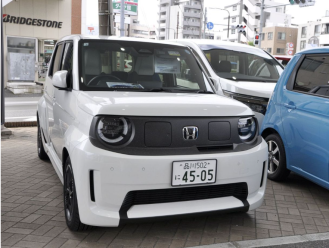 Photo Source: Kyodo
Electric vehicle (EV) sales are surging in Japan, with passenger EV sales reaching 61,090 units in the first seven months of 2026, according to the Japan Automobile Dealers Association. The increase has been driven by expanded government subsidies and the launch of new models, including Honda’s compact Super-ONE EV. The central government raised its maximum EV purchase subsidy to ¥1.3 million this year, while Tokyo also increased its subsidy to the same level in July.
Tokyo Shimbun (Japanese):https://www.tokyo-np.co.jp/article/509204?rct=economics
▶ AI Panel Approves Draft Rules on Disclosing Training Data; Government Eyes Implementation As Early As Autumn
19 Aug, 2026
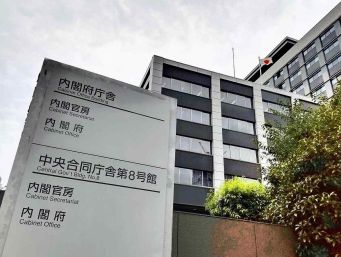 Photo Source: Yomiuri
Japan’s Cabinet Office has drafted new guidelines requiring generative AI companies to provide more transparency about their training data to help protect intellectual property rights. Companies may be asked to disclose whether specific copyrighted works were used in AI training, while sensitive information such as trade secrets will remain protected. The rules are not legally binding and will use a “comply or explain” approach. The government plans to finalize the guidelines and begin implementation as early as autumn.
Yomiuri:https://japannews.yomiuri.co.jp/science-nature/technology/20260819-344124/
▶ Japan International Cooperation Agency Establishes Team Overseeing Yen-Denominated Loans to Africa
20 Aug, 2026
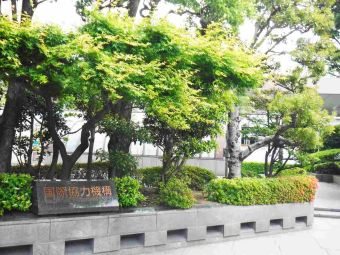 Photo Source: Yomiuri
The Japan International Cooperation Agency (JICA) has established a dedicated team to oversee yen-denominated loans for infrastructure projects across Africa. The team will assess the financial soundness of borrowing countries and the viability of projects, while monitoring them through construction. The move comes as Japan places greater emphasis on lending to Africa, with the government planning to provide up to $5.5 billion in loans to the continent.
Yomiuri:https://japannews.yomiuri.co.jp/politics/politics-government/20260820-344555/
▶ Japan to launch probe on world's 1st Martian moon sample mission
20 Aug, 2026
 Photo Source: Kyodo
Japan’s space agency JAXA plans to launch the Martian Moons Exploration (MMX) probe on October 20 to collect samples from Phobos, one of Mars’ moons, and return them to Earth in fiscal 2031. The mission, a joint international project, aims to investigate the origin of Mars’ moons and advance technologies for future space exploration. A rover jointly developed by French and German teams will also participate in the mission.
Kyodo:https://english.kyodonews.net/articles/-/82690
▶ Japan’s initial 8.9 trillion yen defense budget expected to grow
20 Aug, 2026
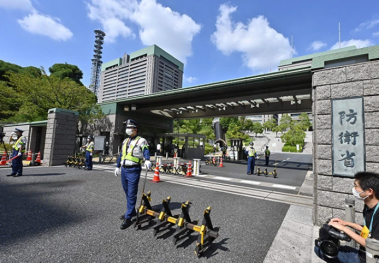 Photo Source: Asahi
Japan’s Defence Ministry is seeking a record ¥8.9 trillion budget for fiscal 2027, with the amount expected to rise further as the government reviews its national security strategy. The request focuses on adapting to new forms of warfare, strengthening sustained combat capabilities and reinforcing Japan’s defence industrial base. It includes funding for attack drones, hypersonic missiles launched from submarines and long-range missile capabilities for unmanned underwater vessels.
Asahi:https://www.asahi.com/ajw/articles/16822271
-------------------------------------------------------------------------------------------------------------------------------------
2. Business News
▶ Japan extracts rare earths from seabed: 3 things to know
25 July, 2026
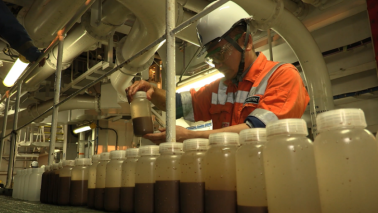 Photo Source: SIP/JAMSTEC
Japan has successfully recovered valuable rare earth elements, including yttrium and dysprosium, from deep-sea mud near Minamitorishima. The discovery has raised expectations for the area’s resource potential and could help Japan reduce its dependence on China. However, the high cost and technical difficulty of extracting and refining rare earths from a depth of 5.6 km remain major challenges. Japan plans larger-scale tests and will assess the project’s profitability in fiscal 2027, with commercial production potentially starting from fiscal 2029 at the earliest.
Nikkei Asia:https://asia.nikkei.com/business/markets/commodities/japan-extracts-rare-earths-from-seabed-3-things-to-know
▶ Japan parts maker ships rare-earth-free sunroof motors for German cars
31 July, 2026
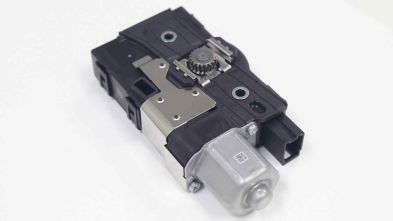 Photo Source: Mitsuba
Japanese auto parts maker Mitsuba has started supplying rare-earth-free sunroof motors to German luxury automakers. Developed with Webasto, the smaller and lighter motor eliminates neodymium and aims for annual sales of 2 million units. Mitsuba plans to expand similar rare-earth-free technology to other automotive motors amid supply and price concerns.
▶ Suzuki to export electric minicars to Europe as soon as 2027
08 Aug, 2026
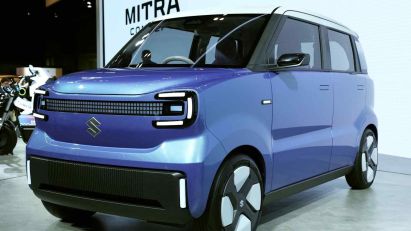 Photo Source: Akitoshi Sugiura/Nikkei
Suzuki plans to launch its first electric kei car in Europe as early as 2027, targeting markets such as the U.K. and Italy. The compact EV, based on the Vision e-Sky, will offer around 310 km of range and is expected to cost under £20,000 in the U.K. Suzuki sees growing demand for affordable small EVs in Europe and hopes the model will strengthen its European business and create opportunities in other small-car markets.
▶ Sony and TSMC to invest ¥1 trillion in joint chip plant in Japan
10 Aug, 2026
 Photo Source: Bloomberg
Sony Group and Taiwan Semiconductor Manufacturing Co. (TSMC) are considering investing a combined ¥1 trillion in a planned joint chip factory in Kumamoto, Japan. The facility is expected to begin production in 2029 and will focus on next-generation image sensors for cars and robots. Sony would be the controlling shareholder, while TSMC would provide chipmaking expertise. The partnership would reduce Sony’s financial burden while giving TSMC a stable source of revenue. Japan’s government is also considering financial support for the project, highlighting the importance of strengthening Japan’s semiconductor and advanced technology industries.
Japan times:https://www.japantimes.co.jp/business/2026/08/10/companies/sony-tsmc-plant-japan/
▶ Japan self-driving startup Tier IV to design open-source AI chips
14 Aug, 2026
 Photo Source: Nikkei
Tier IV plans to develop and freely release open-source AI semiconductor designs for autonomous driving. The chips will use specialized NPUs designed to reduce power consumption and costs. Tier IV will not manufacture the chips itself; automakers and parts makers will be able to use the designs and arrange production. This could shorten development time, lower costs, and reduce dependence on overseas chip suppliers. Tier IV is taking a similar open-source approach with its autonomous-driving software, Autoware.
TIER IV: https://tier4.co.jp/en/updates/press-release/20260805-tieriv-develops-platform-with-astemo
▶ Japan's Rakuten to partner with German AI defense drone startup
17 Aug, 2026
 Photo Source: Mayumi Tsumita/Nikkei
Rakuten Group is partnering with German defence technology startup Helsing to introduce AI-powered autonomous attack drones to Japan’s Self-Defence Forces. Rakuten will help Helsing enter the Japanese market, including by supporting proposals and conducting field tests with the Ground Self-Defence Force, while the two companies are also considering mass production in Japan. The partnership is part of growing defence cooperation between Japan and Europe, particularly Germany, and comes as German Chancellor Friedrich Merz is expected to visit Japan in October to discuss Indo-Pacific security and drone technology. Japan is also planning to strengthen domestic infrastructure for mass-producing drones and expand their use across land, sea and underwater domains. Other Japanese-European partnerships in defence drone technology, including cooperation involving Kawasaki Heavy Industries, Airbus Defence and Space, Portugal’s Tekever and Marubeni, could contribute to greater integration of Japan-European defence supply chains.
▶Japan to construct first large shipbuilding dock since 2017
19 Aug, 2026
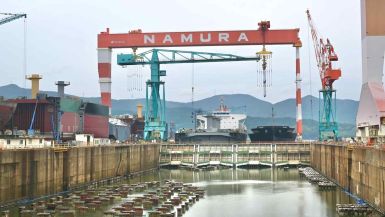 Photo Source: Anna Sato
Japan’s Namura Shipbuilding plans to build a new large dry dock in Saga Prefecture by 2035, the first such facility in Japan since 2017. The project is part of the government’s plan to double domestic shipbuilding capacity by 2035 through ¥1 trillion in public and private investment. The new dock is expected to support the resumption of LNG carrier construction in Japan, as well as vessels powered by next-generation energy sources such as ammonia.
Nikkei Asia:https://asia.nikkei.com/business/transportation/japan-to-construct-first-large-shipbuilding-dock-since-2017
▶ Expansion of Customer Base and Applications for World's First e-methanol Produced in Denmark
20 Aug, 2026
 Photo Source: Mitsui
Mitsui & Co. and Danish renewable energy company European Energy are expanding the customer base and applications for e-methanol produced at their joint venture’s plant in southern Denmark. Initially supplied to A.P. Moller - Maersk as marine fuel, the e-methanol is now also being supplied for chemical products to LEGO and Novo Nordisk, with plans to supply OMV for use as a land-based transportation fuel. The companies aim to expand low-carbon methanol supply in Europe, where demand is expected to grow amid policies such as RED III.
Mitsui: https://www.mitsui.com/jp/en/release/2026/1253986_15351.html
Legal Disclaimer:
EIN Presswire provides this news content "as is" without warranty of any kind. We do not accept any responsibility or liability for the accuracy, content, images, videos, licenses, completeness, legality, or reliability of the information contained in this article. If you have any complaints or copyright issues related to this article, kindly contact the author above.
